A child spotting their first swimming pig is the kind of vacation moment families talk about for years. But knowing how to prepare children for Pig Beach makes a major difference between a joyful photo-filled stop and a day that feels rushed, hot, or overwhelming. A little planning lets your family focus on the clear water, sandy shoreline, and the excitement of meeting one of the Bahamas’ most famous residents.
Pig Beach is an animal encounter, a beach stop, and often part of a full day on the water. That combination is what makes it special. It also means parents should prepare for the boat ride, the sun, the sea, and the simple safety rules that help children enjoy the pigs respectfully.
Start With Your Child’s Comfort on the Water
Before talking about pigs, consider the boat ride. Depending on your departure point and the itinerary, getting to Pig Beach can be a real adventure in itself. Some children love the ride from the first burst of sea spray. Others may be excited at the dock but uneasy once the boat begins moving.
Be honest about your child’s experience on boats. If they have never spent a few hours on the water, explain what they can expect: wind, waves, engine noise, bright sun, and periods of travel between stops. Framing it as part of the adventure helps, but do not oversell it. A child who knows they can sit near a parent, wear a life jacket, and ask the crew for help will usually settle in more easily.
If motion sickness is a concern, speak with your child’s pediatrician before the trip about age-appropriate options. Start the day with a light meal and encourage them to look toward the horizon rather than down at a phone or tablet. Fresh air and a spot where they can see outside often help too.
For younger children, a half-day style experience may be the better fit if available. A full day can be incredible for confident swimmers and curious older kids, especially when it includes snorkeling, turtles, or beach time. For a preschooler who tires quickly, however, less travel time can mean more smiles.
Explain What Pig Beach Is Really Like
Children may arrive expecting a petting zoo. Pig Beach is not one. The pigs are free-roaming animals on a sandy island, and they can be large, quick, curious, and highly interested in food. Setting expectations before you arrive is one of the smartest things a parent can do.
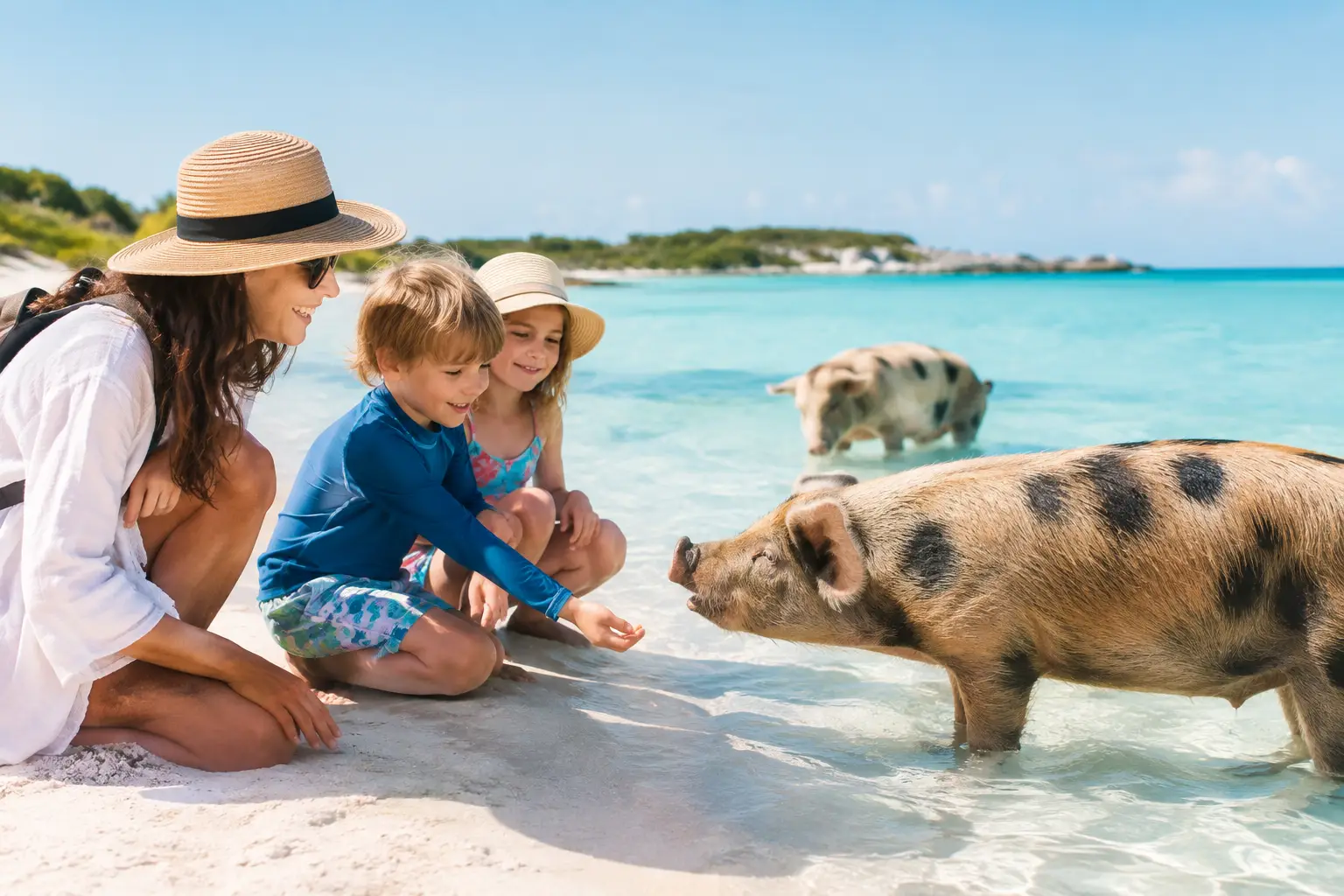
Tell your child that they may see pigs wading in shallow water, walking along the sand, resting in the shade, or approaching visitors. They are fun to watch, but they are not toys. The goal is to give the animals room, listen to the guides, and enjoy the encounter without chasing, grabbing, or startling them.
Use simple language for younger kids: “We watch with calm hands and walking feet.” Older children can understand more detail. Let them know that even friendly-looking animals can react if they feel crowded or surprised. This is not meant to make the experience scary. It gives kids clear boundaries and helps them feel confident.
Set three easy pig rules
Keep the rules short enough for your child to remember on the beach: stay close to an adult, let the guide lead, and never put fingers near a pig’s mouth. If feeding is permitted as part of your excursion, follow the crew’s instructions exactly. Food can make pigs more eager, which is why supervision matters most during those moments.
Avoid bringing your own snacks onto the beach for the pigs. Feeding animals the wrong food can affect their health, and food in a child’s hand may draw more attention than they expect. Your crew will explain the proper approach for that day’s visit.
Pack for the Beach, Not Just the Boat
Packing light is helpful on a boat, but a family beach bag needs to cover a few essentials. The weather can feel much hotter on the water because of the reflection from the sea and sand, even when there is a breeze.
Bring:
- Reef-safe sunscreen and a lip balm with SPF
- UV-protective swim shirts or rash guards
- A hat and sunglasses that fit securely
- A reusable water bottle for each family member
- Towels, dry clothes, and a small waterproof bag for phones
- Water shoes or secure sandals for hot sand and uneven shoreline
Apply sunscreen before boarding, then reapply throughout the day, particularly after swimming. Rash guards are a great choice for children because they cover shoulders and backs without interrupting play. A wide-brimmed hat is useful between stops, although it may not stay on during a breezy ride.
Water shoes are worth considering for kids who dislike the feeling of shells, sea grass, or warm sand underfoot. They also make it easier to walk comfortably when moving from the boat to shore. Choose a pair that stays on well rather than loose flip-flops that can disappear in the water.
Prepare Children for Pig Beach With Water Safety in Mind
Pig Beach is often associated with shallow, postcard-perfect water, but conditions can change with tides, wind, and the day’s location. Never assume that a child can roam freely simply because the beach looks calm in photos.
Discuss a water plan before you get off the boat. Decide who is watching which child, where your family will keep towels and shoes, and whether your child may enter the water without holding an adult’s hand. If both parents are traveling, avoid the common assumption that the other person is watching. Name the responsible adult clearly, especially while taking photos or talking with the crew.
Children should wear properly fitted flotation equipment whenever the crew recommends it and whenever their swimming ability calls for it. A life jacket is not a sign that a child is missing out. It can give a nervous swimmer the confidence to enjoy the water, and it allows parents to relax a little more too.
If your child is not a confident swimmer, tell the crew early. Friendly, experienced guides can help you choose the best place to enter the water and offer practical direction for the beach stop. There is no prize for going farther out. Some of the best memories happen right at the shoreline, with a pig splashing nearby and your child safely beside you.
Keep the Day Fun Without Overscheduling It
A Pig Beach excursion may include several bucket-list experiences in one day. That is exciting, but children can become tired from the heat, swimming, travel, and constant stimulation. Build in quiet moments.
Offer water regularly, even if kids say they are not thirsty. Give them a chance to sit in the shade, have a snack, and warm up after swimming. If a child becomes cranky or quiet, they may simply need a break before the next stop.
It also helps to manage the photo pressure. Of course you want the picture of your child beside a swimming pig. But forcing a nervous child to stand too close can turn a magical moment into a stressful one. Let them watch from a comfortable distance first. Many children become more curious once they see that a parent and guide are calm.
Bring a waterproof camera or use a secure phone pouch, but take a few photos and then put the device away. Kids notice when adults are present. The laughter, surprise, and first glimpse of a pig paddling toward shore are better experienced than directed.
Choose an Excursion That Supports Families
The right excursion is not always the longest one or the one with the most stops. For families, quality service, clear instructions, comfortable boat space, and a crew that welcomes questions can matter more than packing every possible activity into one schedule.
Before booking, ask about the expected duration, travel time, age guidance, available shade, restroom considerations, what is included, and whether the day may change due to weather. Conditions on the water always deserve respect, and a good operator will adjust the plan when safety calls for it.
At Shore 2 Shore Bahamas, the goal is to make your family feel looked after from the moment you step aboard. Share your children’s ages, swimming comfort, and any concerns before departure so the crew can help create an experience that feels exciting and manageable.
A prepared child does not need to be fearless or an expert swimmer to enjoy Pig Beach. They simply need a trusted adult nearby, clear expectations, sun protection, and permission to experience the day at their own pace. That leaves plenty of room for the good stuff: sandy toes, salty hair, and a story no classroom show-and-tell can top.