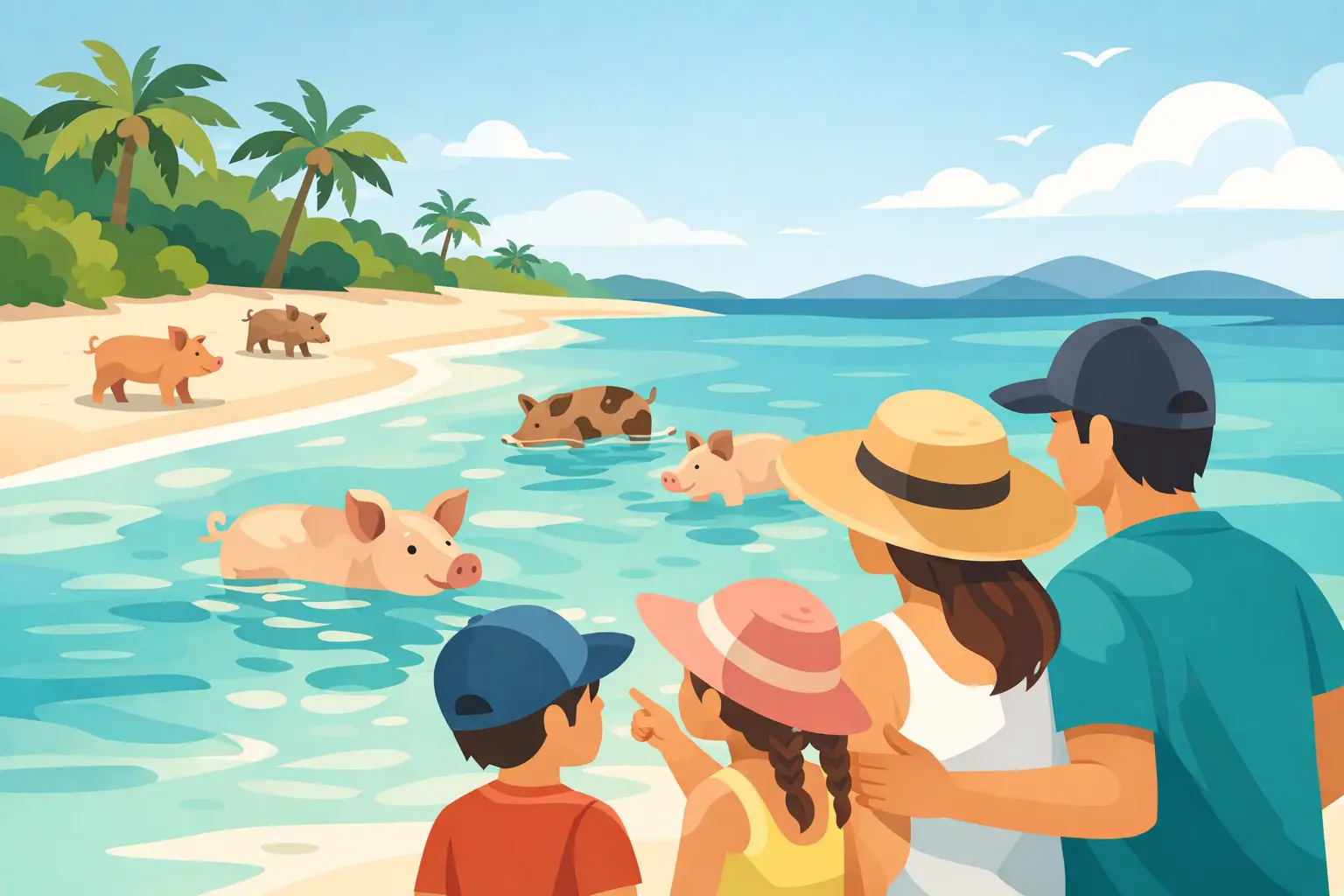
Pig Beach is one of those Bahamas experiences children talk about long after vacation ends: clear water, soft sand, and friendly-looking swimming pigs arriving at the shoreline. But is Pig Beach safe for kids? For most families, it can be a fun and memorable stop when parents choose a well-run excursion, stay close, and treat the animals with the same respect they would give any large animal.
The key is setting the right expectation. Pig Beach is not a petting zoo, and the pigs are not trained performers. They are free-roaming animals on a beach, often excited by visitors and food. A little preparation helps your family enjoy the magic without turning the encounter into a stressful moment.
Is Pig Beach Safe for Kids on a Family Excursion?
Yes, Pig Beach can be safe for children who are closely supervised, comfortable around water, and old enough to follow simple instructions. The safest visits tend to be calm, organized, and unhurried. Your captain and crew should explain how to approach the beach, where to enter the water, and how to interact with the pigs before anyone steps ashore.
Age, confidence, and temperament matter more than a single universal age cutoff. An adventurous 10-year-old who listens carefully may be more comfortable than a nervous 5-year-old. Toddlers can still enjoy seeing the pigs from a parent’s arms, the boat, or a comfortable spot farther up the sand. They do not need to be in the middle of the action to have a great time.
Families should also remember that the route to Pig Beach is part of the day. Exuma excursions can involve a longer boat ride, open-water conditions, sun exposure, and several activity stops. If your child gets motion sick easily or is not used to being on a boat, plan ahead with a conversation about the day and any family-approved motion-sickness preparation.
The Biggest Safety Consideration: Respect the Pigs
The pigs are the reason everyone comes, but they deserve space. They may look relaxed while resting in the sand, then become eager when they notice visitors carrying food. Larger pigs can be surprisingly strong, and even a smaller pig may nip if a hand gets too close to its mouth.
Teach children to keep their fingers away from the pigs’ faces and never try to hug, climb on, chase, corner, or pull an animal. They should approach slowly, stay at an adult’s side, and step back if a pig moves toward them quickly. A good family rule is simple: look, laugh, take photos, and let the pigs choose their own space.
Feeding rules can vary by location and operator. Follow the crew’s direction every time. If feeding is allowed, an adult should handle it or carefully guide an older child. Never wave food around, hide it behind your back, or let kids toss snacks into a crowd of pigs. That can create excitement and competition among the animals.
If a pig seems pushy, noisy, or focused on food, calmly move away. There is no prize for being closest. The best photos often happen when your family gives the animals room and lets the scene unfold naturally.
What if a Child Is Afraid?
That is completely okay. Pig Beach should feel exciting, not like a challenge your child has to overcome. Start by watching from the boat or the edge of the beach. Let your child see how the crew and other guests behave around the pigs, then decide whether they want to get closer.
A parent can stay back with a younger child while the rest of the family takes pictures or enters the water. On a private or semi-private style trip, there is often more flexibility to move at your family’s pace. A successful stop may mean a close-up photo from the sand rather than a swim beside a pig – and that still counts as a wonderful vacation memory.
Water Safety Matters as Much as Animal Safety
The famous images of Pig Beach can make the water look like a shallow, calm swimming pool. Conditions are often beautiful, but the ocean is still the ocean. Depth, current, boat traffic, wind, and wave conditions can change from day to day.
Keep non-swimmers and younger children within arm’s reach in the water. Use properly fitted life jackets when recommended by the crew, especially during boat transfers or for children who are not strong swimmers. Floatation devices are helpful, but they are not a substitute for direct adult supervision.
Shoes are also a smart choice. Water shoes or secure sandals can protect small feet from hot sand, shells, uneven surfaces, and anything hidden beneath the water. Avoid loose flip-flops that can easily wash away or make it harder for kids to walk confidently at the shoreline.
Before booking, ask whether the tour is a good fit for your children’s ages and swimming ability. A quality operator will give straightforward guidance rather than simply saying every activity is right for every guest. Shore 2 Shore Bahamas can help families choose an excursion pace and boat experience that makes sense for their group.
Choose the Right Day, Not Just the Right Tour
A family-friendly Pig Beach visit begins before you leave the dock. Weather and sea conditions affect comfort, particularly on a full-day adventure. A child who is excited at breakfast may feel very different after a bumpy ride, too much sun, or a skipped snack.
Build in the basics: a solid breakfast, plenty of water, sun protection, and a light layer for the ride home. Bring reef-safe sunscreen, apply it before boarding, and reapply as needed. A rash guard and wide-brimmed hat add protection without making sunscreen your only plan.
It also helps to pack a dry change of clothes and a small towel for each child. Wet swimsuits, salty skin, and an air-conditioned ride can make even a sunny day feel chilly. Keep phones, medications, and snacks in a waterproof bag, and tell the crew about allergies or medical needs before departure.
When It May Be Better to Wait
Pig Beach may not be the best fit for every child on every day. Consider postponing or choosing a gentler beach stop if your child is ill, very anxious around animals, unable to follow safety instructions, or struggling with motion sickness. Families with infants should be realistic about heat, shade, nap schedules, and the length of time on the water.
A responsible captain may adjust the itinerary, change a stop, or cancel due to weather. That is not a disappointment in safety terms – it is good judgment. The Bahamas is at its best when the ocean is treated with respect.
Simple Ground Rules Kids Can Remember
Before arriving, give children a short safety talk they can actually remember: stay with your grown-up, use calm hands, do not put fingers near pig mouths, listen to the crew, and tell an adult if they feel scared or unwell. Keep it positive rather than scary. You are preparing them to enjoy the experience responsibly.
Parents should stay present too. It is tempting to focus on photos when the pigs come into view, but this is the moment to put one adult in charge of watching the children. Get the family photo after everyone is settled, not while a younger child is trying to balance in shallow water or navigate around an eager animal.
Make It a Memory, Not a Rush
Pig Beach is safe for kids when adults lead with awareness, the crew leads with good local knowledge, and children are allowed to enjoy the encounter at their own comfort level. The goal is not to get the closest possible selfie. It is to share a bright, joyful Bahamas moment your child can feel proud of – sandy feet, huge smiles, and a story worth retelling on the ride home.