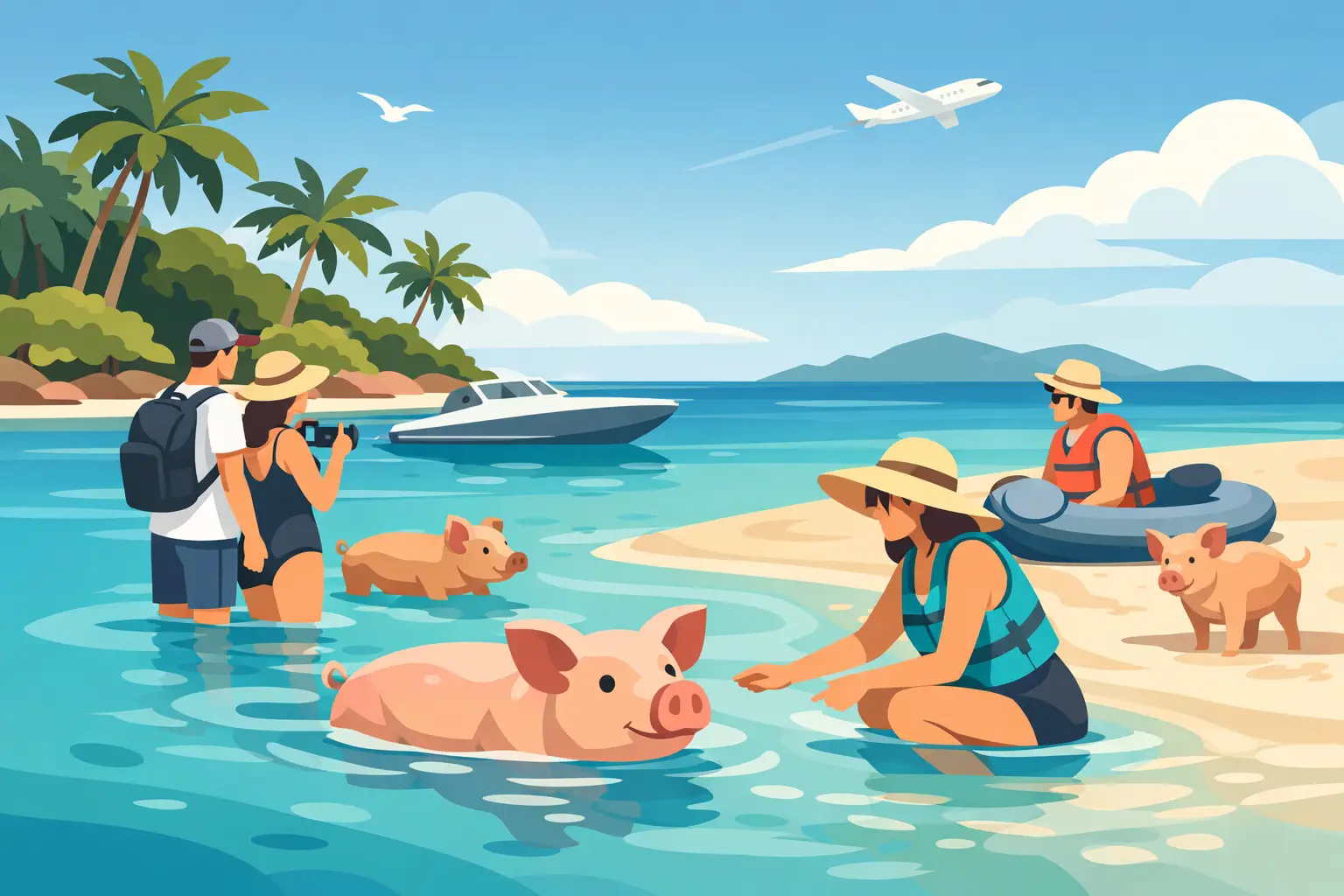
Pig Beach looks like a postcard: clear Exuma water, soft sand, and famous swimming pigs making their way toward shore. Knowing how to visit Pig Beach safely makes the experience even better. A little preparation helps protect you, your family, the pigs, and the beautiful cays that make this Bahamas day trip so memorable.
The best Pig Beach visits feel fun, relaxed, and well organized. You should be able to enjoy the photos and the water without worrying about boat logistics, unpredictable animal behavior, or what to do when a pig gets a little too interested in your beach bag.
Choose a Tour That Puts Safety First
Pig Beach is reached by boat, and the journey is a major part of the adventure. From Nassau, Exuma pig excursions can include open-water cruising, scenic island views, snorkeling stops, and time at other signature attractions. That means the quality of your captain and crew matters just as much as the destination.
Look for a tour operator that clearly explains what is included, how long you will be on the water, and what type of boat you will ride. A professional crew should give a safety briefing before departure, explain where life jackets are located, monitor weather conditions, and provide clear guidance at every stop. If conditions are not right for a planned route or beach landing, a responsible captain may adjust the itinerary. That is good judgment, not a ruined day.
For families, couples, and groups who want a more personalized experience, a private or semi-private charter can be especially comfortable. You have more room to ask questions, move at your own pace, and get hands-on support when entering or exiting the water.
Understand That the Pigs Are Animals, Not Props
The pigs are the stars of the beach, but they are still animals with their own instincts, size, and boundaries. Some may be curious and gentle. Others may be focused on food, protective of their space, or simply not interested in a close encounter. Treating them with respect is the easiest way to stay safe.
Stay calm when pigs approach. Do not run, shriek, wave your arms, or try to push them away. Quick movements can make an animal more agitated, particularly around feeding areas. Stand to the side, give the pigs room to pass, and follow your guide’s instructions about where guests should gather.
Avoid hugging, climbing on, chasing, cornering, or picking up pigs. Even a small pig can bite or knock someone off balance, and larger pigs are much stronger than they look in vacation photos. Keep your hands away from a pig’s mouth and do not place fingers near food.
If feeding is permitted at your stop, use only the food and method approved by the crew. Never bring snacks from your boat bag to feed the pigs. Human foods, wrappers, and sugary treats can harm the animals and encourage aggressive behavior. Some beaches or operators may limit feeding altogether, so always follow the rules in place that day.
Give Piglets Extra Space
Piglets may be adorable, but they are not an invitation to crowd in. Adult pigs can become protective when young pigs are nearby. Let your guide point out the best places for photos, and use your camera zoom rather than moving closer than the animals allow.
Wear the Right Gear for a Beach Landing
Pig Beach is often a shallow-water landing, which means you may step from a boat ladder into the sea before walking onto sand. Water shoes or secure sandals with straps are a smart choice. They protect your feet from shells, uneven ground, and hot sand, and they are far safer than loose flip-flops when boarding a boat.
Bring a lightweight cover-up, hat, sunglasses with a strap, and a dry change of clothes for the ride back. The Bahamian sun can feel much stronger on the water because it reflects off the surface. Apply broad-spectrum, water-resistant sunscreen before departure and reapply as directed, especially after swimming or towel drying.
Keep valuables minimal. A waterproof phone pouch is helpful for pictures, but do not hold your phone out near animals if you are also holding food or standing in the water. Secure cameras, hats, and loose items before you step off the boat. Nothing slows down a great beach stop like searching for a floating sandal.
Be Smart Around Boats and Open Water
The beach is only one part of the day. Safe boat habits begin the moment you board. Listen during the crew briefing, keep walkways clear, and hold a rail when moving around while the boat is underway. Even calm seas can produce an unexpected wake.
Do not jump from the boat unless your captain says it is safe. Enter the water only from the designated area, and never swim toward propellers, anchors, or another vessel. If you are not a confident swimmer, say so before the tour begins. A good crew would rather know early and help you enjoy the stop comfortably.
Children need close supervision at all times, both on deck and in the water. Keep them within arm’s reach during a pig encounter, and remind them before arrival that they should watch quietly, use gentle movements, and never feed or touch an animal without a guide’s direction.
Hydration deserves attention, too. Sea breeze can make you forget how much sun you are getting. Drink water consistently throughout the day, eat a light meal before departure, and go easy on alcohol. Heat, dehydration, and boat motion are not a fun combination.
Respect the Beach, the Water, and the Experience
A safe visit is also a respectful one. Do not leave food, plastic, bottles, or personal belongings on the sand. Pack out everything you bring, and keep an eye out for small items that can blow overboard. The Exumas are known for their bright water and unspoiled beauty because visitors and operators work to protect them.
If your trip includes snorkeling, keep a comfortable distance from coral, turtles, fish, and other marine life. Never stand on coral or reach for an animal. Your crew can show you how to float, use your mask, and enjoy the reef without disturbing it.
Photos are part of the fun, but do not let a picture override common sense. Skip the close-up if a pig is crowding you, if the water is choppy, or if your child is becoming uncomfortable. The best photos are usually the natural ones: a relaxed smile, a pig strolling nearby, and that incredible Bahamian water in the background.
Know When to Step Back
Pay attention to the signs that an encounter has become too close. Step away slowly if a pig is repeatedly nudging, following, vocalizing loudly, snapping, or trying to get into your belongings. Do not turn it into a game. Move toward your guide or the group and let the crew manage the situation.
The same rule applies to your own comfort. If you feel seasick, overheated, nervous in deep water, or uneasy around the pigs, tell a crew member right away. There is no prize for pushing through. The right team can offer shade, water, a quieter spot on the boat, or a simple adjustment that helps you enjoy the rest of your day.
Before leaving the beach, rinse or sanitize your hands, especially if you handled approved feed or touched surfaces around the animals. Keep any cuts covered before the excursion, and avoid direct contact with animal waste. These small habits are easy, practical, and worthwhile.
Make Room for the Full Bahamas Experience
Pig Beach is a bucket-list stop, but it is even more special as part of a well-paced day on the water. A great itinerary leaves time for scenic cruising, a refreshing swim, colorful reef snorkeling, and the chance to simply take in the islands. Rushing from one photo to the next misses the point.
With a trusted local crew such as Shore 2 Shore Bahamas, you can focus on the fun while experienced guides handle the route, timing, and on-the-water details. Bring your sense of adventure, listen to your crew, and give the pigs the respectful space they deserve. That is how a famous beach stop becomes a truly happy Bahamas memory.